Virtual Tours for Probate Listings Pennsylvania | PA Probate Help
Virtual Tours for Probate Listings: Do They Actually Help Sell Estate Property?

Key Takeaways
Virtual tours provide practical benefits for probate properties that often sit vacant during administration. Estate properties frequently lack the occupied, lived-in feel that helps buyers envision themselves in a home. Virtual tours allow potential buyers to explore empty properties thoroughly from anywhere, helping them understand the space and layout despite the vacant condition that's common in probate sales.
The "as-is" nature of probate properties makes virtual tours particularly valuable. Most probate real estate sells in as-is condition because executors typically lack the funds or authorization to make significant updates before sale. Virtual tours help buyers assess the property's actual condition comprehensively, reducing surprises and wasted showings from buyers who wouldn't be interested once they saw the property in person.
Virtual tours filter out unqualified buyers, saving executors time and reducing property access issues. Probate properties often require executor coordination for showings, sometimes involving managing keys, coordinating with family members, or traveling to vacant homes. Virtual tours let serious buyers self-qualify before requesting physical showings, meaning fewer unnecessary visits to coordinate and less wear on the property from excessive traffic.
Cost and complexity of virtual tours have decreased dramatically. Basic 360-degree virtual tours can be created for $200-500 using smartphone apps and simple equipment, while professional Matterport-style tours with floor plans typically run $300-800. For executors managing estate budgets carefully, this modest investment often pays for itself by attracting more qualified buyers faster.
Why Probate Properties Benefit From Virtual Tours More Than Regular Listings
Probate real estate faces unique challenges that make virtual tours especially useful. Understanding these distinctions helps executors make smart marketing decisions.
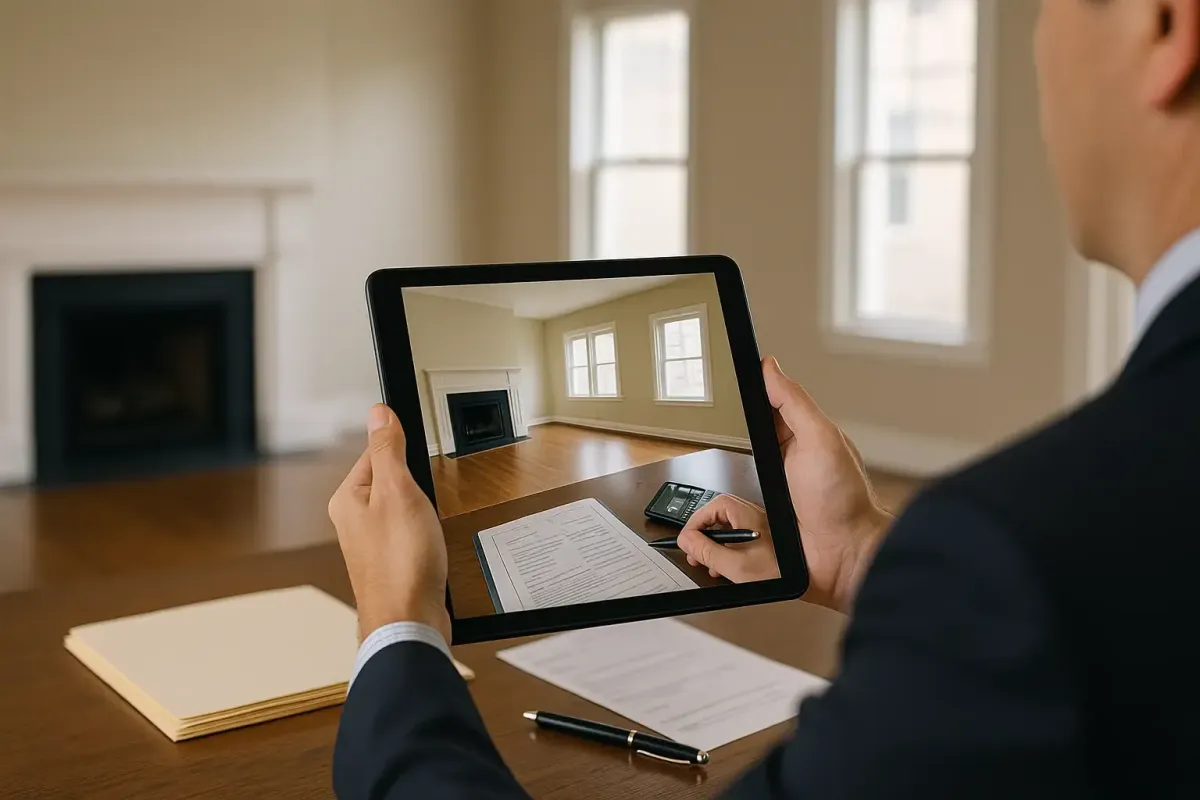
Vacant properties are harder to sell. When someone dies, their home typically sits empty during the probate process. Empty rooms look smaller than furnished ones, buyers struggle to envision how spaces work, and vacant homes can feel cold or neglected even when they're perfectly fine structurally. Virtual tours help overcome this disadvantage by letting buyers explore the entire property systematically, room by room, getting a real sense of flow and scale.
I worked with an executor last year whose mother's home had been vacant for seven months during administration. The house was actually in good condition - it just looked sad and empty during showings. We added a basic virtual tour for about $400. Three things changed immediately: first, online listing views increased by about 60%. Second, the buyers who did request showings were much more serious - they'd already explored virtually and knew they were genuinely interested. Third, we got an offer within two weeks from an out-of-state buyer who'd never physically visited the property but felt confident after spending time in the virtual tour.
Out-of-state buyers are common for probate properties. Adult children who've moved away, siblings scattered across the country, or distant relatives who inherited - probate often involves beneficiaries and buyers who aren't local. Virtual tours eliminate geography as a barrier. A potential buyer in California can thoroughly explore a Pennsylvania estate property at 10 PM their time without coordinating schedules or booking flights.
As-is condition requires transparency. Unlike traditional home sales where sellers make repairs and stage beautifully, probate properties usually sell in whatever condition they're in when the person died. Maybe there's old wallpaper. Perhaps the kitchen hasn't been updated since 1985. The carpet might be worn. Virtual tours provide honest documentation of the property's actual state, which builds trust with buyers and reduces the "this isn't what I expected" problem that wastes everyone's time.
What Types of Virtual Tours Work Best for Estate Properties?
Not all virtual tours are created equal. Different technologies serve different purposes for probate real estate.
Basic 360-degree photo tours are the most cost-effective option. These use 360-degree cameras or even smartphone apps to capture panoramic images of each room. Users click to move between rooms and can look around in all directions from each position. For simple, straightforward properties, basic 360 tours provide excellent value. Costs typically run $200-400 if you hire a photographer, or even less if the executor or agent creates them using apps like Zillow 3D Home or similar tools.
Matterport-style 3D tours offer the premium experience. These use specialized cameras that create fully immersive 3D models of properties. Users can "walk" through the space smoothly, view a dollhouse-style overview showing the entire floor plan, and see detailed measurements. The quality is noticeably higher than basic 360 tours, but so is the cost - typically $300-800 depending on property size. For higher-value estate properties or homes with unique features, the investment makes sense.
Virtual staging combined with tours addresses the empty-room problem. Some services can digitally add furniture to the virtual tour images, helping buyers visualize how rooms could look when occupied. This costs extra (usually $50-150 per room) but can be worthwhile for properties that show poorly when empty. The key is disclosure - buyers must understand the furniture isn't actually there.
Video walkthroughs serve a different purpose. Unlike interactive tours where users control what they see, video walkthroughs are narrated tours led by the agent or executor. These work well for properties with stories to tell or features that need explanation. For instance, an old family home with historical significance might benefit from a video that explains the property's history while showing the physical space.
Do Virtual Tours Actually Sell Probate Properties Faster?
The data on virtual tours' effectiveness is interesting and sometimes surprising. Here's what research shows and what I've observed working with estate properties.
Harvard Business School research on 75,000 home sales found that virtual tours had minimal impact on sale prices for most listings. Properties with virtual tours didn't consistently sell for more money or significantly faster than those without them. However - and this is important - the research identified specific scenarios where virtual tours did help: properties in less desirable neighborhoods, homes sold by smaller real estate firms, and properties that potential buyers might otherwise overlook.
This actually makes sense for probate real estate. Estate properties often check several of these boxes. They may be in neighborhoods where buyers are more uncertain about values. They're frequently sold by executors working with agents who aren't mega-producers with huge marketing budgets. And vacant, as-is estate properties certainly risk being overlooked by buyers scrolling through dozens of listings online.
The filtering function is valuable even when tours don't increase sale price. Multiple real estate agents I've worked with report that virtual tours don't necessarily bring higher offers, but they dramatically reduce wasted showings. Buyers who schedule appointments after viewing the virtual tour are much more likely to be seriously interested. For executors coordinating property access - sometimes from out of state or while managing multiple estate responsibilities - this efficiency matters.
Listings with virtual tours get 40-85% more online clicks according to various industry studies. More eyeballs on your listing means a larger pool of potential buyers. For probate properties that might otherwise blend into the background of market listings, this visibility boost can be significant.
I've noticed that virtual tours seem most effective for mid-range probate properties ($150,000-400,000 in Pennsylvania) that are structurally sound but dated cosmetically. These properties benefit from buyers being able to assess them thoroughly online. Luxury properties often get extensive photography anyway, and very low-priced properties typically attract investors who care more about numbers than virtual tours. It's the middle market where virtual tours provide the clearest advantage.
How Should Executors Implement Virtual Tours for Estate Properties?
If you're an executor considering a virtual tour for the estate property you need to sell, here's a practical approach.
Wait until the property is show-ready. Don't create the virtual tour while the home is still full of the deceased's belongings or before basic cleaning is complete. Virtual tours permanently document whatever state the property is in when photographed. If you'll be cleaning out personal items and doing basic cleaning anyway, do that first. The tour should show the property at its best "as-is" condition - which means empty, clean, and with minor issues addressed if feasible.
Choose the right level of service for the property value and complexity. For a $180,000 simple ranch home, a basic 360-degree tour created with a smartphone app might be perfectly adequate. For a $450,000 home with interesting architecture or multiple levels, investing in a professional Matterport tour makes more sense. Consider your buyer pool too - out-of-state heirs or distant beneficiaries benefit more from comprehensive virtual tours than local buyers who can easily visit.
Coordinate with your real estate agent. If you're working with an agent experienced in probate real estate, they probably have relationships with photographers who create virtual tours regularly. They'll know what level of tour makes sense for your market and property. Some agents include basic virtual tours in their services; others charge separately or recommend specific providers.
Be honest about property condition in both the tour and listing description. The virtual tour should accurately represent what buyers will see in person. Don't use extreme wide-angle lenses that make rooms look larger than they are, and make sure lighting shows the property honestly rather than hiding problems. Pennsylvania real estate law requires disclosure of known material defects, and misrepresenting condition - even through misleading photography - creates potential liability for executors.
Budget appropriately from estate funds. Virtual tour costs are legitimate estate administration expenses, just like appraisal fees or staging costs. Document the expense clearly in your estate records. For a typical Pennsylvania probate property, budget $300-600 for a professional virtual tour. If estate funds are very tight, basic 360 tours created with smartphone apps can cost as little as $50-150 through budget services.
What About Other Digital Marketing for Estate Properties?
Virtual tours are just one component of effective digital marketing for probate real estate. A comprehensive approach works best.
Professional photography remains essential. Even with a virtual tour, the main listing photos are what catch buyers' attention as they scroll through results. Invest in quality photos that show the property well. For probate properties in as-is condition, this might mean strategically photographing angles that show space and light even if some finishes are dated. Good photography typically costs $150-350 for a residential property.
Video walkthroughs provide different value than virtual tours. While virtual tours let buyers explore independently, video walkthroughs allow you or your agent to narrate, point out features, and tell the property's story. For estate properties with historical significance or unique characteristics, a 2-3 minute video walkthrough combined with a virtual tour creates a compelling package. These can be shared on social media and email campaigns easily.
Aerial drone photography helps for properties with land or interesting exteriors. If the estate includes acreage, outbuildings, or sits in a particularly scenic location, drone photography (typically $150-300 additional) provides perspective that ground-level photos can't match. This matters less for suburban homes on standard lots but can be valuable for rural properties or homes with notable grounds.
Single property websites create a dedicated destination for serious buyers. Some agents create custom websites for individual listings, featuring the virtual tour, photo galleries, neighborhood information, and contact forms. For higher-value estate properties, this extra step provides a professional presentation that stands out. Many virtual tour providers include hosting that allows the tour to be embedded anywhere online.
Common Questions Executors Ask About Virtual Tours
Let me address the practical concerns executors raise when considering virtual tours for estate properties.
"Should I wait to create the virtual tour until the house is completely empty?" Yes, generally. You want the property to be at its final condition before documenting it with a virtual tour. Buyers need to see what they'll actually be getting. If personal property will be removed before sale, remove it before creating the tour. However, if the property will take months to fully clear and you need to start marketing sooner, you can note in the listing that some contents are being removed. Just make sure anything visible in the tour will actually convey with the property or be gone before closing.
"How do I arrange for a virtual tour if I'm out of state?" Many photographers who create virtual tours are accustomed to working with remote clients. You coordinate a specific day and time, arrange property access (leaving a key or using a lockbox), and the photographer handles the rest. They'll send you a link to review the tour when it's ready. If you're working with a real estate agent, they typically coordinate this entire process for you.
"Can virtual tours show problems with the property, or do they hide issues?" This depends on how the tour is created. Professional virtual tour photographers use techniques that present properties honestly but favorably - proper lighting, straightforward angles, etc. They're not trying to hide problems, but they're presenting the space at its best. However, if there are significant condition issues you're aware of, Pennsylvania law requires disclosure regardless of what the virtual tour shows. The virtual tour should be one component of transparent marketing, not a tool for deception.
"What if I can't afford a virtual tour for the estate property?" If estate funds are genuinely insufficient, prioritize professional listing photographs over a virtual tour. Good photos are more essential. However, consider whether a basic virtual tour might help the property sell faster, thereby reducing holding costs (utilities, insurance, property taxes, maintenance) that add up over time. Sometimes spending $300 on a virtual tour leads to a sale that's $2,000 cheaper in avoided holding costs because it sold two months faster. You can also explore whether local real estate investors or cash buyers would be interested in the property without extensive marketing.
Frequently Asked Questions
Q: Do I need permission from beneficiaries or the Orphans' Court to spend estate money on a virtual tour?
A: Generally, executors have authority to make reasonable decisions about marketing estate property for sale without specific court approval, and a virtual tour is a standard marketing expense. However, if you're facing a disputed estate or if beneficiaries have been questioning your decisions, it may be wise to document why you believe the virtual tour expense is worthwhile for maximizing sale value. If the estate is under supervised administration where the court oversees major decisions, include virtual tour costs in your overall property marketing budget when seeking approval for the sale. Virtual tours typically cost much less than even one month of carrying costs for a vacant property, making them defensible as reasonable expenses.
Q: How long does a virtual tour remain accessible after the property sells?
A: This varies by service provider. Some virtual tour hosting includes 12 months of access as standard, with options to extend for a small annual fee (typically $50-100 per year). Once the property sells, you generally don't need the tour to remain public, though some executors like keeping it accessible until closing finalizes just in case issues arise. If you're using a service provided through your real estate agent, ask about hosting duration. For probate purposes, save a copy or screenshots of the tour for your estate records in case questions arise later about how the property was marketed.
Q: Can virtual tours be used for properties with severe condition issues or hoarding situations?
A: Yes, but approach this carefully. If the estate property has significant condition problems or was subject to hoarding, a virtual tour can actually be helpful in setting appropriate buyer expectations - but only after cleanup. Never create a virtual tour documenting hoarding conditions or severe neglect while those conditions exist. First, address safety issues, remove contents, and perform basic cleaning. Then, a virtual tour that honestly shows a property with condition issues helps attract buyers who specifically want fixer-uppers or investment properties. Some buyers prefer properties with issues because they get better prices, so honest documentation through a virtual tour can actually attract your ideal buyer pool.
Q: What if the virtual tour makes the property look worse than it actually is?
A: Professional virtual tour photographers are skilled at presenting properties honestly while highlighting their best features. If you're concerned about this, review the tour before it goes live and request adjustments if needed. Most services offer some revision or editing capability. Remember that the goal isn't to make a 1985 kitchen look like a 2025 renovation - it's to show the space clearly and let buyers understand the layout, flow, and size. Buyers shopping for probate properties often expect dated finishes and are looking for potential, not perfection. The virtual tour should help them see that potential clearly.
Make Smart Marketing Decisions for Estate Property
Virtual tours aren't magic bullets that guarantee fast sales at top dollar. But for Pennsylvania executors dealing with vacant estate properties that need to sell, they're valuable tools that typically pay for themselves through increased visibility and more qualified buyer interest.
The key is matching the technology to the property and situation. Simple properties might need only basic 360 tours, while complex or higher-value estates benefit from comprehensive Matterport tours with floor plans and detailed measurements.
If you're an executor managing Pennsylvania probate real estate and trying to determine the right marketing strategy, working with a Certified Probate Real Estate Specialist who understands estate property challenges can help you make cost-effective decisions that serve the estate's interests.
Contact PA Probate Help to discuss marketing strategies for your estate property, or download our free Pennsylvania probate guide for comprehensive information on selling inherited real estate.
