
A COMMITMENT TO CLARITY & SUPPORT THROUGHOUT YOUR PROBATE PROCESS
Inventory & Appraisement Process in Pennsylvania
What Executors Must Do to Document and Value Estate Assets Correctly
Once an estate is opened, the executor must complete a formal inventory that lists all estate assets and assigns accurate values. This step is required under Pennsylvania probate law and is used for inheritance tax, estate planning, and final distribution. This guide explains the full process clearly and simply.
Trusted by families across Pennsylvania
Clear, step-by-step guidance
Support at every stage of probate
Service Name in City, State

“Fast, reliable service for homeowners in Las Vegas.”
This is a Paragraph Font
Bullet List 1
Bullet List 1
Bullet List 1
Bullet List 1
Bullet List 1
Understanding Inventory & Appraisement in Pennsylvania
The inventory is the official record of everything the deceased owned at the time of death. Executors must list assets, assign fair market values, and submit the completed inventory to the Register of Wills. Accurate valuation is essential for inheritance tax calculations and proper distribution of the estate.
Key elements include:
Identifying all probate assets
Assigning fair market value or appraisal value
Completing the REV-1500 or estate inventory form
Filing deadlines with the Register of Wills
Valuing real estate, personal property, and financial accounts

H2 Heading (Section Title)
Use this to explain what the service is about in 2–4 sentences.
- Bullet List 1
- Bullet List 2
- Bullet List 3
- Bullet List 4
- Bullet List 5
Why This Matters
This is a Paragraph Font
Common Challenges With Inventory & Appraisement
Difficulty identifying all estate assets
Confusion about whether certain items are probate or non-probate
Not knowing when a professional appraisal is required
Incorrect valuation of real estate or personal property
Failing to meet filing deadlines
Missing bank accounts or overlooked investments
Not understanding how valuations affect inheritance tax
Why This Matters
Incorrect or incomplete inventories can lead to delays, tax penalties, disputes between beneficiaries, or personal liability for the executor. A clear process ensures accuracy, compliance, and faster estate administration.

The Challenges You’re Facing
This is a Paragraph Font
Bullet List 1
Bullet List 2
Bullet List 3
Bullet List 4
Bullet List 5
Why This Matters
This is a Paragraph Font
Pennsylvania Inventory & Appraisement Process Explained
Step 1:
Identify All Probate Assets
List real estate, vehicles, bank accounts, investments, business interests, and personal property.
Step 2:
Determine Which Assets Require a Professional Appraisal
Real estate, valuable collections, antiques, or business assets often require formal valuation.
Step 3:
Assign Fair Market Value to Each Item
Use bank statements, brokerage values, appraisal reports, and comparable sales.
Step 4:
Complete the PA Inventory Form (REV-1500 or County Form)
This form lists all assets and values for the Register of Wills and inheritance tax filing.
Step 5:
File the Inventory With the Register of Wills
The inventory must be filed by the deadline—typically within 9 months of death.
Step 6:
Provide Copies to Beneficiaries (If Required)
Some counties require notification; others only require court submission.
Step 7:
Use the Inventory for Tax, Distribution, and Accounting
The inventory forms the basis for inheritance tax, final accounting, and estate closure.
How PA Probate Help Assists With Inventory & Appraisement
We help executors begin probate confidently and avoid mistakes during the earliest and most important step of the process.
Benefits:
Guidance on identifying and valuing all probate assets
Support determining what requires professional appraisal
Help completing the inventory form accurately
Assistance meeting filing deadlines
Clear explanations of tax impact and distribution requirements
Step-by-step direction through all probate valuation tasks
Want Personalized Guidance for Your Situation?
Accurate inventories protect executors from disputes and tax issues. We can help you determine what must be listed and how assets should be valued.
Related Probate Guides in Pennsylvania
These detailed guides explain the most important steps within the Pennsylvania probate process. Each resource provides a deeper look at specific requirements, documents, and procedures that every executor should understand.

Opening an Estate in Pennsylvania
Learn how to begin the probate process and secure executor authority.
Learn more →

Letters Testamentary
& Letters of Administration
Learn what these documents mean and how they grant the executor legal authority.
Learn more →
Closing an Estate in Pennsylvania
See what’s required to finalize probate and complete the estate process.
Learn more →
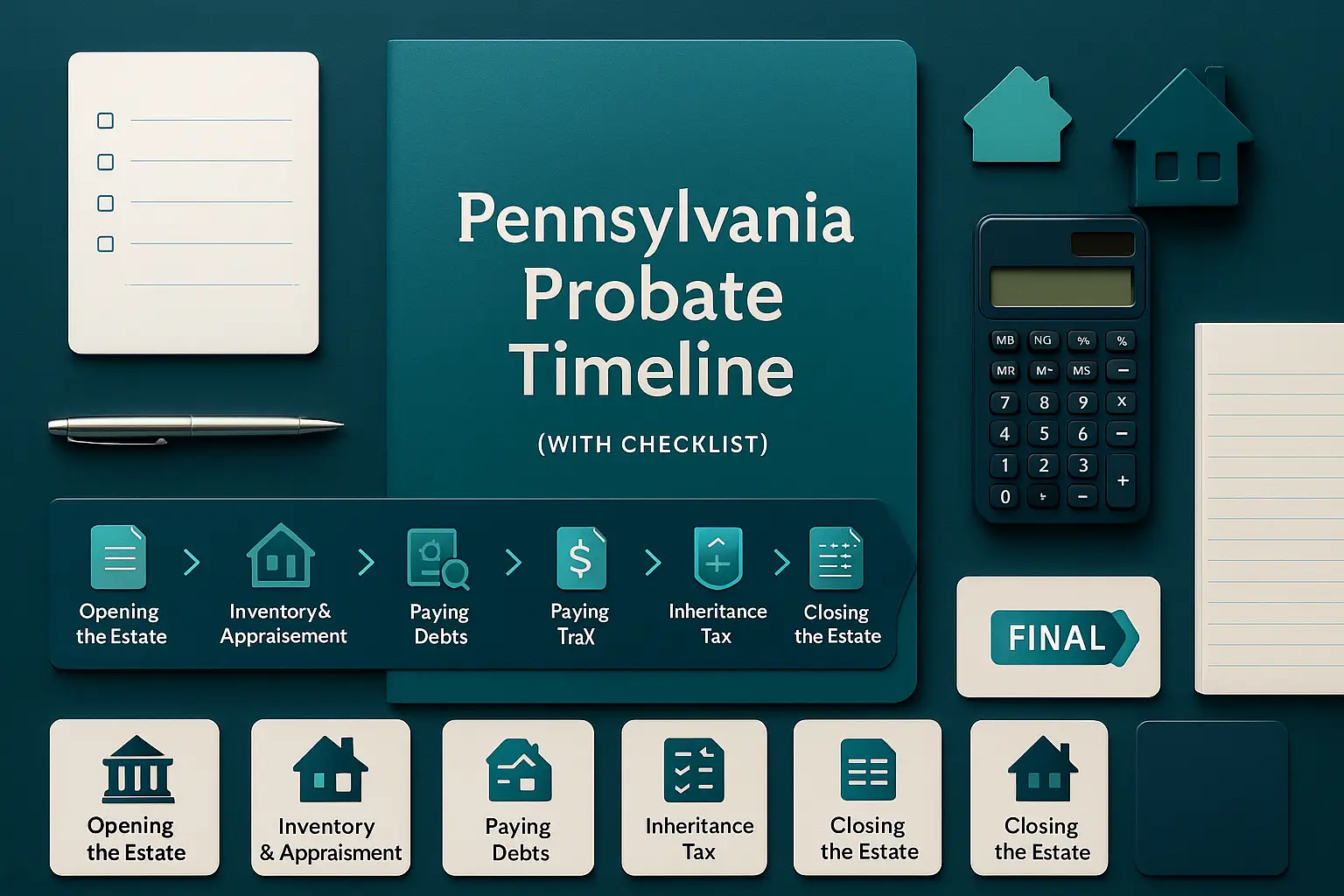
Pennsylvania Probate Timeline
(With Checklist)
A step-by-step overview of how long probate takes and what happens at each stage.
Learn more →
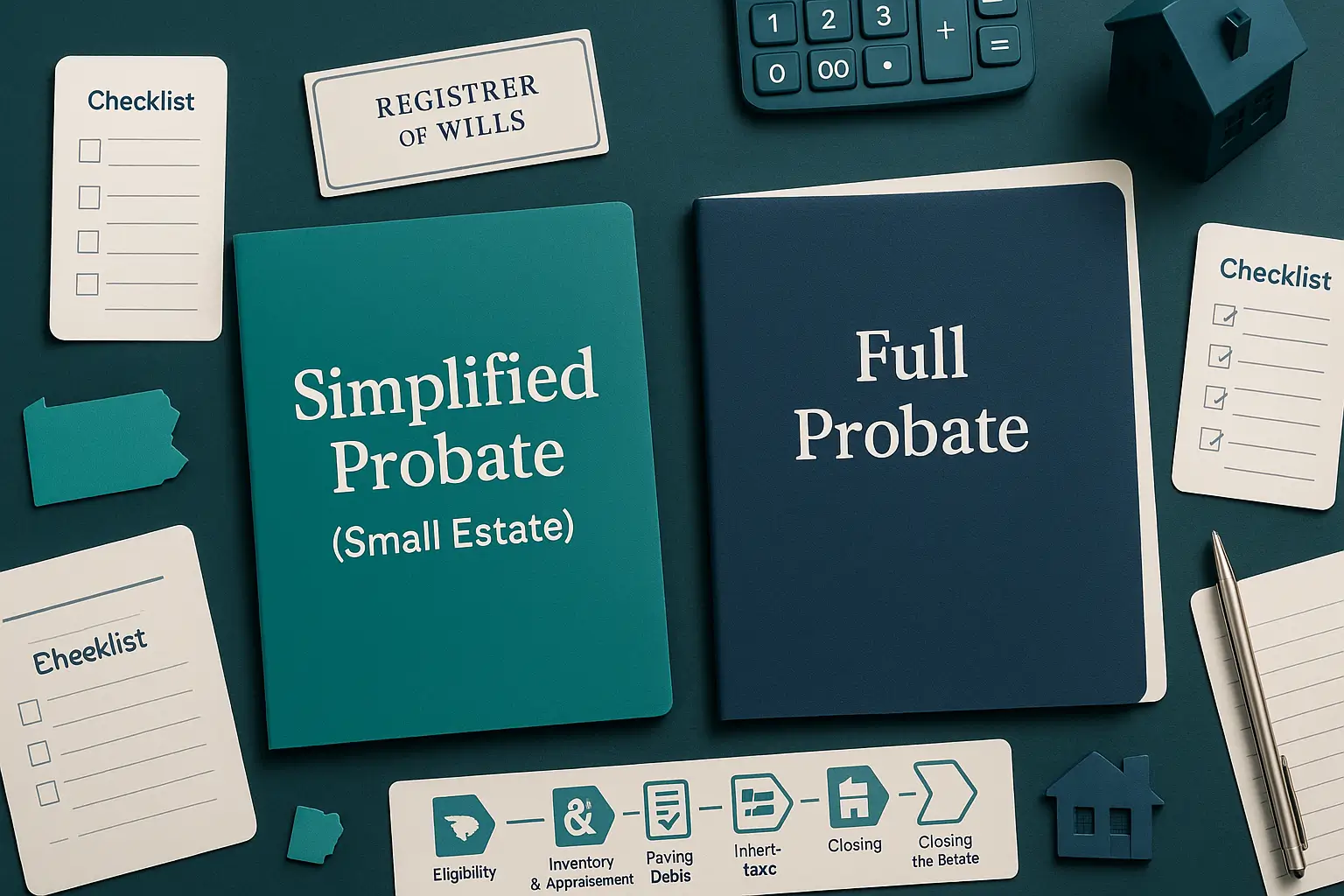
Simplified Probate vs Full Probate
Find out whether an estate qualifies as a Pennsylvania small estate and how the process differs.
Learn more →
Pennsylvania Probate
Process - Main Guide
Return to the complete, step-by-step overview of probate in Pennsylvania.
Learn more →
Frequently Asked Questions
What is the inventory in a Pennsylvania estate?
The inventory is the official list of all probate assets and their values for the estate. It is required for inheritance tax, accounting, and distribution.
When is the inventory due in Pennsylvania probate?
The inventory must be filed within 9 months of the decedent’s death. Some counties may require earlier submission depending on case activity.
Do all assets go on the Pennsylvania inventory form?
Only probate assets go on the inventory; non-probate assets are excluded. Examples include joint accounts, POD accounts, and life insurance with beneficiaries.
Do I need an appraisal for estate assets in Pennsylvania?
You need an appraisal if an asset’s value cannot be determined easily or requires expert evaluation. Real estate, collections, and business interests often need formal appraisal.
How do I determine fair market value for estate assets?
Fair market value is based on what a willing buyer would pay on the date of death. Bank balances, appraisals, comparable sales, and statements are used.
What form is used for the Pennsylvania estate inventory?
Executors typically use the county Inventory Form or the REV-1500 inventory schedule. Requirements vary by county.
What happens if I submit an incorrect or incomplete inventory?
Incorrect inventories can delay probate, cause tax issues, or create disputes between beneficiaries. Executors may need to file an amended inventory.
H2 Heading (Section Title)
This is a Paragraph Font
- Bullet List 1
- Bullet List 2
- Bullet List 3
- Bullet List 4
- Bullet List 5
Why Our Process Works
This is a Paragraph Font
Need Help Navigating Pennsylvania Probate?
If you’re serving as an executor or helping manage an estate in Pennsylvania, you don’t have to figure everything out alone. Getting the right guidance early can help prevent delays, disputes, and costly mistakes.
Clear, step-by-step guidance
Support for executors and families
Pennsylvania probate focused
Executor & Personal Representative Help
Real Estate, Property & Assets
Selling a Probate Property in Pennsylvania
Probate Real Estate Preparation
Property Issues in Probate
Probate Appraisals & Valuations
Taxes, Costs & Financial Issues
Contested Wills in Pennsylvania
Probate Disputes & Litigation
Questions About Wills
Intestate Estates in PA
Wills, Disputes & Legal Issues
Contested Wills in Pennsylvania
Probate Disputes & Litigation
Questions About Wills
Intestate Estates in PA