
A COMMITMENT TO CLARITY & SUPPORT THROUGHOUT YOUR PROBATE PROCESS
Simplified Probate vs Full Probate in Pennsylvania
How to Know Which Probate Process Applies to an Estate
Not every estate in Pennsylvania must go through the full probate process. Some estates qualify for simplified procedures that reduce court involvement, paperwork, and timelines. This guide explains the difference between simplified probate and full probate in Pennsylvania and helps executors understand which process applies.
Clear timeline expectations
Executor-focused guidance
Pennsylvania probate specific
Service Name in City, State

“Fast, reliable service for homeowners in Las Vegas.”
This is a Paragraph Font
Bullet List 1
Bullet List 1
Bullet List 1
Bullet List 1
Bullet List 1
Understanding Probate Options in Pennsylvania
Pennsylvania offers different probate paths depending on estate size, asset type, and whether there is a valid will. Understanding whether an estate qualifies for simplified probate helps executors choose the correct process and avoid unnecessary delays.
Key factors that determine the probate path include:
Total estate value
Types of assets involved
Whether real estate is owned solely by the decedent
Presence of a valid will
Beneficiary and creditor considerations
H2 Heading (Section Title)
Use this to explain what the service is about in 2–4 sentences.
- Bullet List 1
- Bullet List 2
- Bullet List 3
- Bullet List 4
- Bullet List 5
Why This Matters
This is a Paragraph Font
Common Confusion Around Simplified Probate
Assuming all small estates avoid probate
Misunderstanding Pennsylvania small estate thresholds
Confusion between simplified probate and no probate
Overlooking real estate that forces full probate
Filing incorrect paperwork with the Register of Wills
Delays caused by choosing the wrong process
Why This Matters
Using the wrong probate process can result in rejected filings, added court fees, and extended timelines. Knowing which option applies ensures compliance and smoother administration.

The Challenges You’re Facing
This is a Paragraph Font
Bullet List 1
Bullet List 2
Bullet List 3
Bullet List 4
Bullet List 5
Why This Matters
This is a Paragraph Font
Simplified Probate Compared to Full Probate in PA
Simplified Probate (Small Estate Procedures)
Simplified probate applies to qualifying small estates and allows reduced court involvement.s, and receives legal authority to act.
Typical characteristics:
Lower estate value
Limited assets
Fewer required filings
Shorter timeline
Less court supervision
Full Probate
Full probate applies when estates exceed simplified thresholds or include complex assets.
Typical characteristics:
Higher estate value
Real estate owned solely by decedent
Formal inventory and accounting
Court oversight
Longer timelines
Key Differences at a Glance:
Factor
Estate size
Court involvement
Inventory required
Timeline
Complexity
Simplified Probate
Smaller
Limited
Reduced
Shorter
Low
Probate
Larger
Ongoing
Full
Longer
Moderate to High
How PA Probate Help Assists With Probate Decisions
Choosing between simplified probate and full probate can be confusing, especially when estate assets, real estate, or beneficiary issues are involved. PA Probate Help provides clear guidance to help executors understand which probate process applies and what steps must be taken next.
Support includes:
Reviewing estate details to determine probate eligibility
Explaining differences between simplified and full probate
Identifying assets that may require full probate
Helping executors prepare correct filings
Reducing delays caused by choosing the wrong process
Providing step-by-step guidance through each probate path
Not Sure Which Probate Process Applies?
Determining eligibility for simplified probate can be confusing. If you’re unsure which process applies to your situation, getting clarity early can prevent unnecessary delays.
Related Probate Guides in Pennsylvania
These detailed guides explain the most important steps within the Pennsylvania probate process. Each resource provides a deeper look at specific requirements, documents, and procedures that every executor should understand.

Opening an Estate in Pennsylvania
Learn how to begin the probate process and secure executor authority.
Learn more →
Letters Testamentary & Administration
Learn how legal authority is granted to manage estate tasks.
Learn more →
Inventory & Appraisement Process
See how asset valuation follows after obtaining legal authority.
Learn more →
Closing an Estate in Pennsylvania
See what’s required to finalize the estate, submit the accounting, and complete probate.
Learn more:
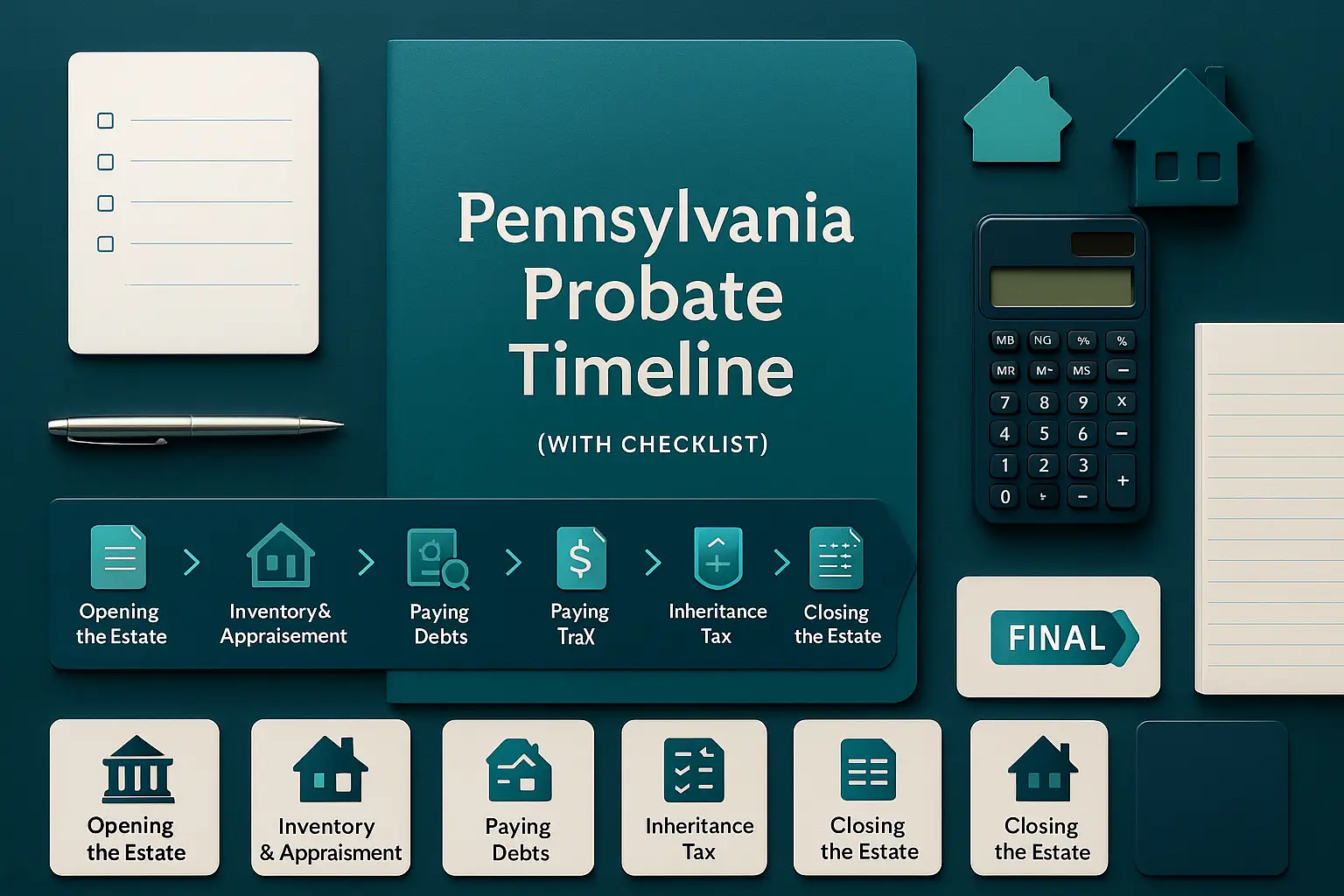
Pennsylvania Probate Timeline (With Checklist)
See how simplified probate and full probate compare in terms of timing, required steps, and common delays.
Learn more →
Pennsylvania Probate
Process - Main Guide
Return to the complete, step-by-step overview of probate in Pennsylvania.
Learn more →
Frequently Asked Questions
What is simplified probate in Pennsylvania?
Simplified probate is a reduced court process available to qualifying small estates. It involves fewer filings and faster resolution.
What qualifies as a small estate in Pennsylvania?
Small estates generally fall below specific value thresholds set by Pennsylvania law. Eligibility depends on asset type and ownership.
Does owning real estate require full probate in PA?
Yes. Solely owned real estate usually requires full probate. Certain jointly owned properties may avoid probate.
Is simplified probate the same as avoiding probate?
No. Simplified probate still involves the court but uses reduced procedures. Avoiding probate entirely requires non-probate assets.
Can an estate start as simplified probate and convert to full probate?
Yes. If additional assets are discovered, the estate may need to proceed under full probate rules.
Does simplified probate shorten the probate timeline?
Yes. Simplified probate typically resolves faster due to fewer requirements. Timelines vary by estate.
Who decides whether an estate qualifies for simplified probate?
The Register of Wills determines whether an estate qualifies based on the information filed.
H2 Heading (Section Title)
This is a Paragraph Font
- Bullet List 1
- Bullet List 2
- Bullet List 3
- Bullet List 4
- Bullet List 5
Why Our Process Works
This is a Paragraph Font
Need Help Choosing the Right Probate Path?
Understanding whether an estate qualifies for simplified probate can significantly affect timelines and responsibilities. If you want help determining the correct process and next steps, guidance can make the process easier and more efficient.
Clear eligibility guidance
Executor-focused support
Pennsylvania probate experience
Executor & Personal Representative Help
Real Estate, Property & Assets
Selling a Probate Property in Pennsylvania
Probate Real Estate Preparation
Property Issues in Probate
Probate Appraisals & Valuations
Taxes, Costs & Financial Issues
Contested Wills in Pennsylvania
Probate Disputes & Litigation
Questions About Wills
Intestate Estates in PA
Wills, Disputes & Legal Issues
Contested Wills in Pennsylvania
Probate Disputes & Litigation
Questions About Wills
Intestate Estates in PA