
A COMMITMENT TO CLARITY & SUPPORT THROUGHOUT YOUR PROBATE PROCESS
Pennsylvania Probate Process Guide
Lawful Steps, Executor Responsibilities, and Estate Requirements Explained
The probate process in Pennsylvania is the legal procedure to validate a will, appoint an executor, settle debts, pay inheritance tax, and distribute assets to beneficiaries.
A clear, structured guide for Pennsylvania executors and families who need straight answers about timelines, legal steps, and estate obligations.
If you are managing an estate or helping a loved one through the Pennsylvania probate process, you need practical, easy-to-understand guidance. This page explains every stage of probate, what the court requires, how inheritance tax works, and how to avoid common delays or mistakes. It is designed for first-time executors, trustees, and beneficiaries seeking clarity.
Licensed guidance
Executor support
Pennsylvania probate insights
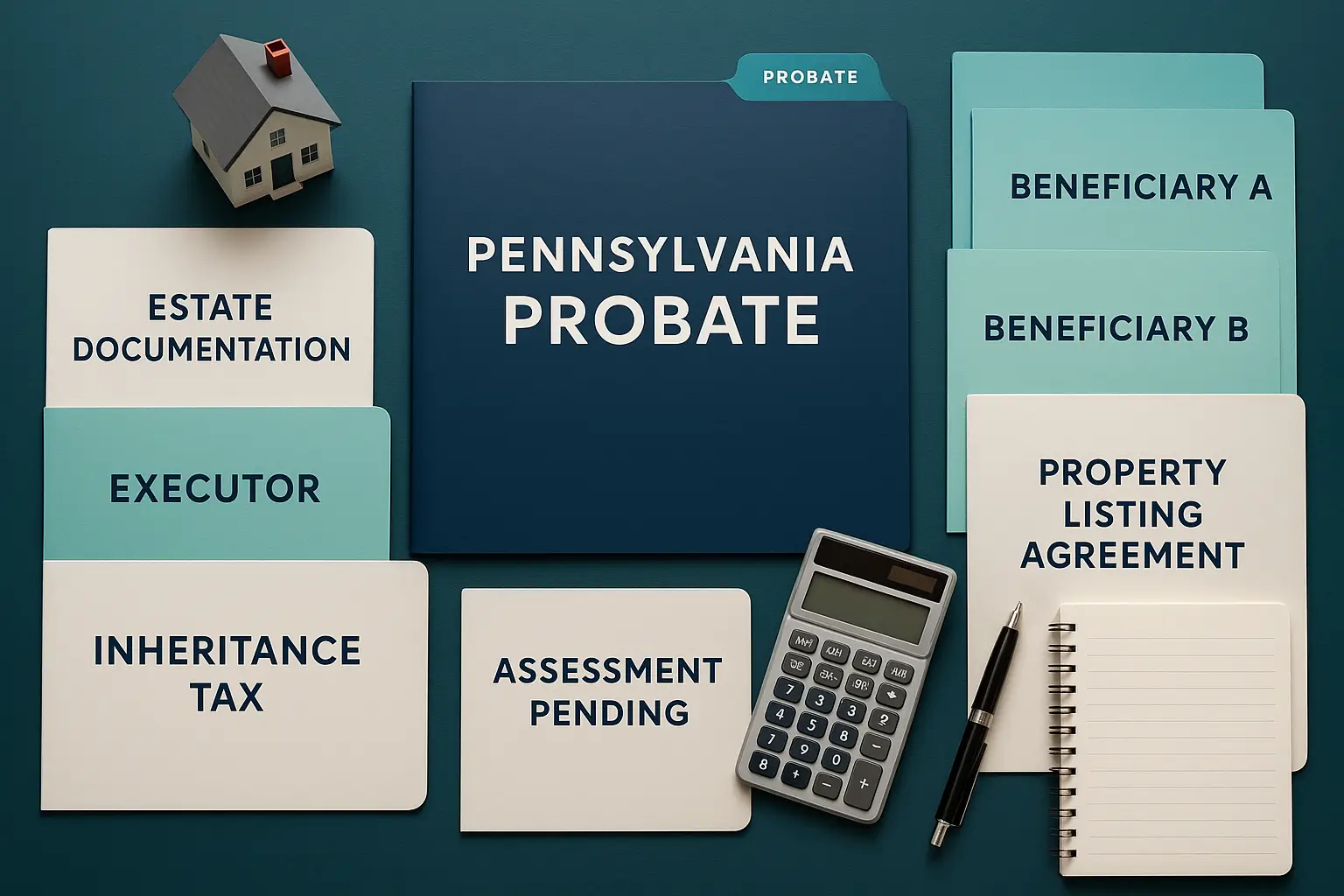
Understanding the Probate Process in Pennsylvania
Probate in Pennsylvania is the court-supervised process used to verify a will, authorize an executor, settle debts, and transfer assets under state law.
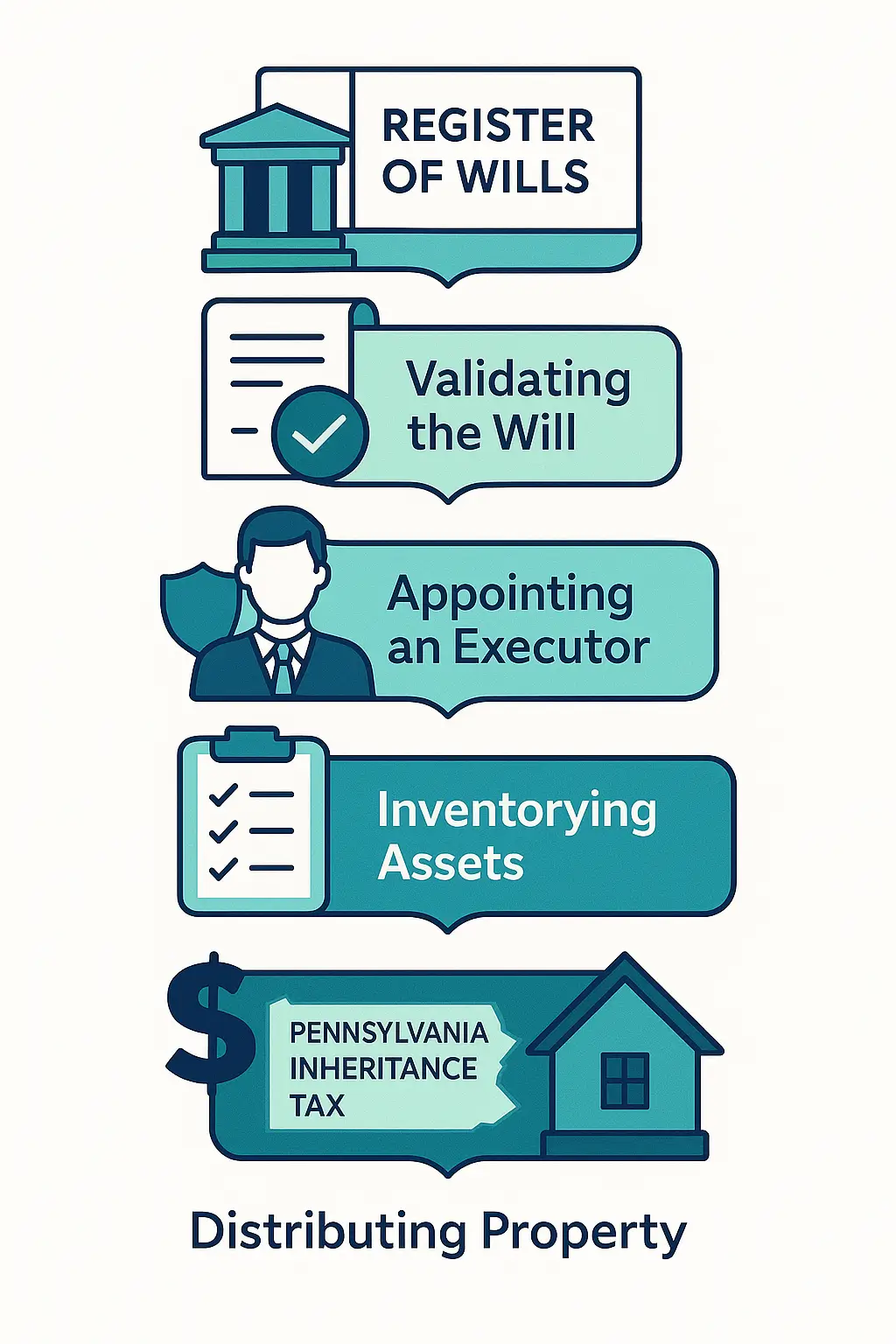
Probate begins when the will is filed with the Register of Wills in the county where the deceased lived. Once the executor receives Letters Testamentary or Letters of Administration, they gain legal authority to manage estate assets. The process includes notifying beneficiaries, paying debts, filing necessary tax forms, and ensuring all property is distributed legally and accurately.
Probate typically involves:
Validating the will
Appointing an executor or administrator
Inventorying assets
Paying debts and taxes
Distributing property to heirs and beneficiaries
Why This Matters
Understanding probate requirements prevents delays, protects estate value, and reduces the risk of disputes among beneficiaries. Executors who follow the correct procedures safeguard themselves from personal liability and ensure the estate is managed in compliance with Pennsylvania law.
Probate authenticates a will, authorizes an executor, documents assets, pays taxes, and ensures proper distribution.
Common Challenges Families Face During Probate
Families often struggle with probate because the process includes legal filings, time-sensitive deadlines, tax obligations, and real estate decisions that require clear guidance.
Why This Matters
Small mistakes during probate can cause major delays, unexpected tax penalties, or disputes that damage family relationships. Identifying these challenges early keeps the estate on track and prevents avoidable setbacks.
Probate challenges arise from paperwork, taxes, deadlines, and family dynamics.
Executor confusion about legal duties
Delays caused by missing documents
Beneficiary disagreements
Uncertainty about inheritance tax
Real estate complications
Creditor claims and notices
Court filings and compliance issues
The Complete Pennsylvania Probate Process Explained
The probate process generally includes filing the will, obtaining executor authority, notifying beneficiaries, inventorying assets, paying taxes and debts, distributing property, and closing the estate.
Step 1:
File With the Register of Wills
Executors must secure the will, death certificate, and financial records before probate begins.
Why This Matters:
Missing documents immediately delay probate filings and slow down the estate timeline.
Details:
Documents typically include bank statements, insurance policies, deeds, titles, and safe deposit information.
Step 2:
File With the Register of Wills
Probate starts when the will is filed and the executor petitions for legal authority.
Why This Matters:
The estate cannot legally move forward until the Register of Wills approves the executor.
Step 3:
Receive Letters Testamentary or Administration
The executor receives a short certificate proving legal authority to act on behalf of the estate.
Why This Matters:
Banks, insurers, and financial institutions require this before releasing assets.
Step 4:
Notify Beneficiaries and Creditors
Pennsylvania law requires written notice to beneficiaries and published notice to creditors.
Why This Matters:
Proper notice protects the estate from future claims and keeps distributions legally valid.
Step 5:
Inventory and Value Estate Assets
The executor must create a complete list of the estate’s assets and their fair market value.
Why This Matters:
Accurate valuations affect inheritance tax and ensure fair distribution among beneficiaries.
Step 6:
Pay Estate Debts and Pennsylvania Inheritance Tax
Debts and taxes must be paid before heirs can receive property.
Why This Matters:
Executors can become personally liable for unpaid taxes or premature distributions.
Step 7:
Distribute Property to Beneficiaries
Assets are transferred based on the will or Pennsylvania intestacy laws.
Why This Matters:
Distribution finalizes the executor’s most visible duty and must be done accurately.
Step 8:
File Final Accounting and Close the Estate
The estate closes once the executor files a final accounting documenting all transactions.
Why This Matters:
Closing protects the executor from further claims and completes the legal process.
The probate process moves from document gathering to property distribution and final accounting.
Why Families Choose Certified Probate Support
Executors choose professional probate support to avoid delays, reduce stress, and ensure legal compliance throughout the estate process.

Clear instructions and guidance
Help with court filings and notices
Support with inheritance tax
Real estate preparation and sale assistance

Beneficiary communication support

Document organization and timeline management
Why This Matters:
Executors often manage estates while grieving, working, or handling family obligations. Professional guidance reduces the risk of costly mistakes and keeps the process moving smoothly.
Explore Related Probate Topics
These detailed guides explain the most important steps within the Pennsylvania probate process. Each resource provides a deeper look at specific requirements, documents, and procedures that every executor should understand.

Opening an Estate in Pennsylvania
Learn how to begin the probate process, what documents you need, and how to file with the Register of Wills.
Learn more:
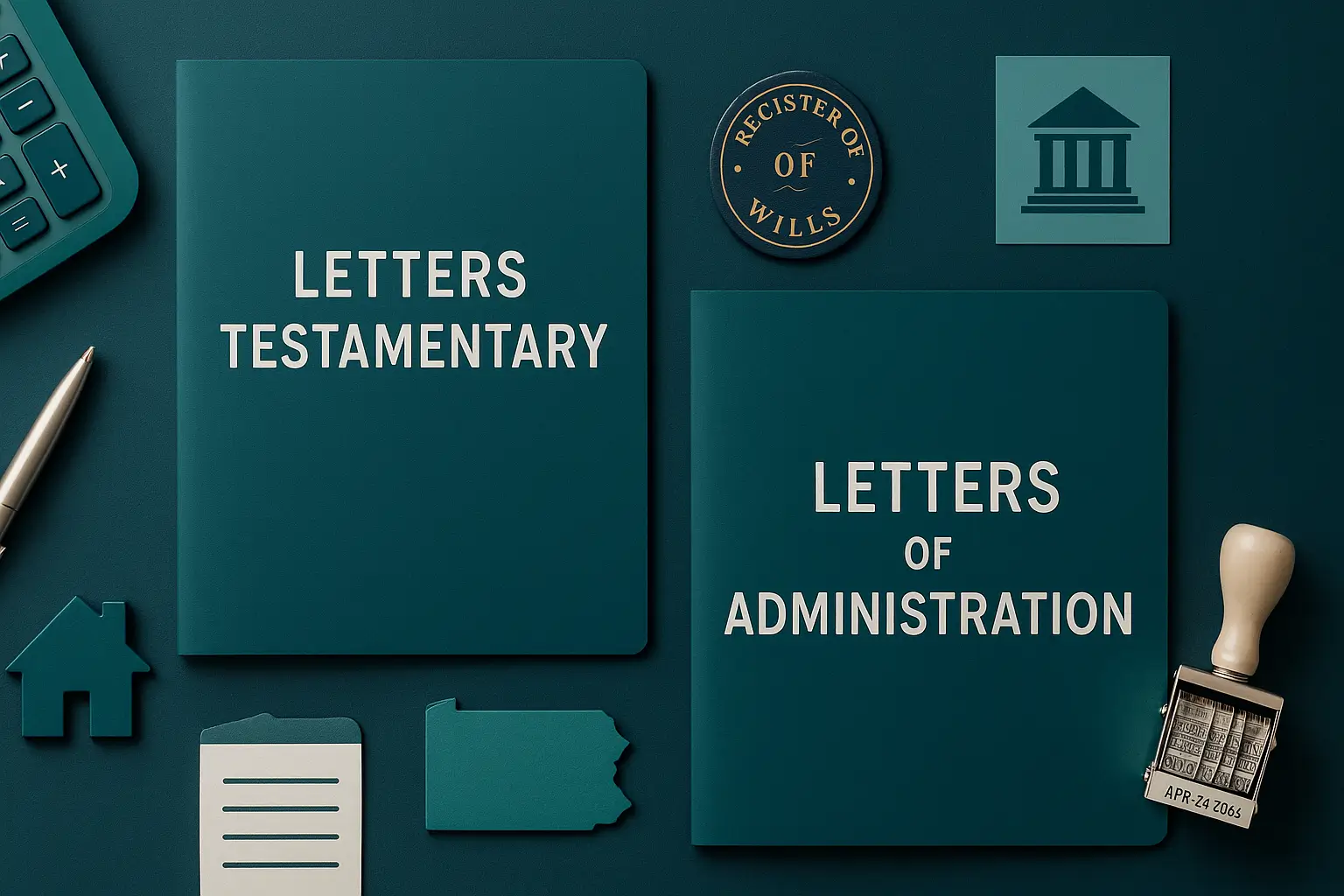
Letters Testamentary &
Letters of Administration
Understand the legal authority these documents provide and why they are required before the executor can act.
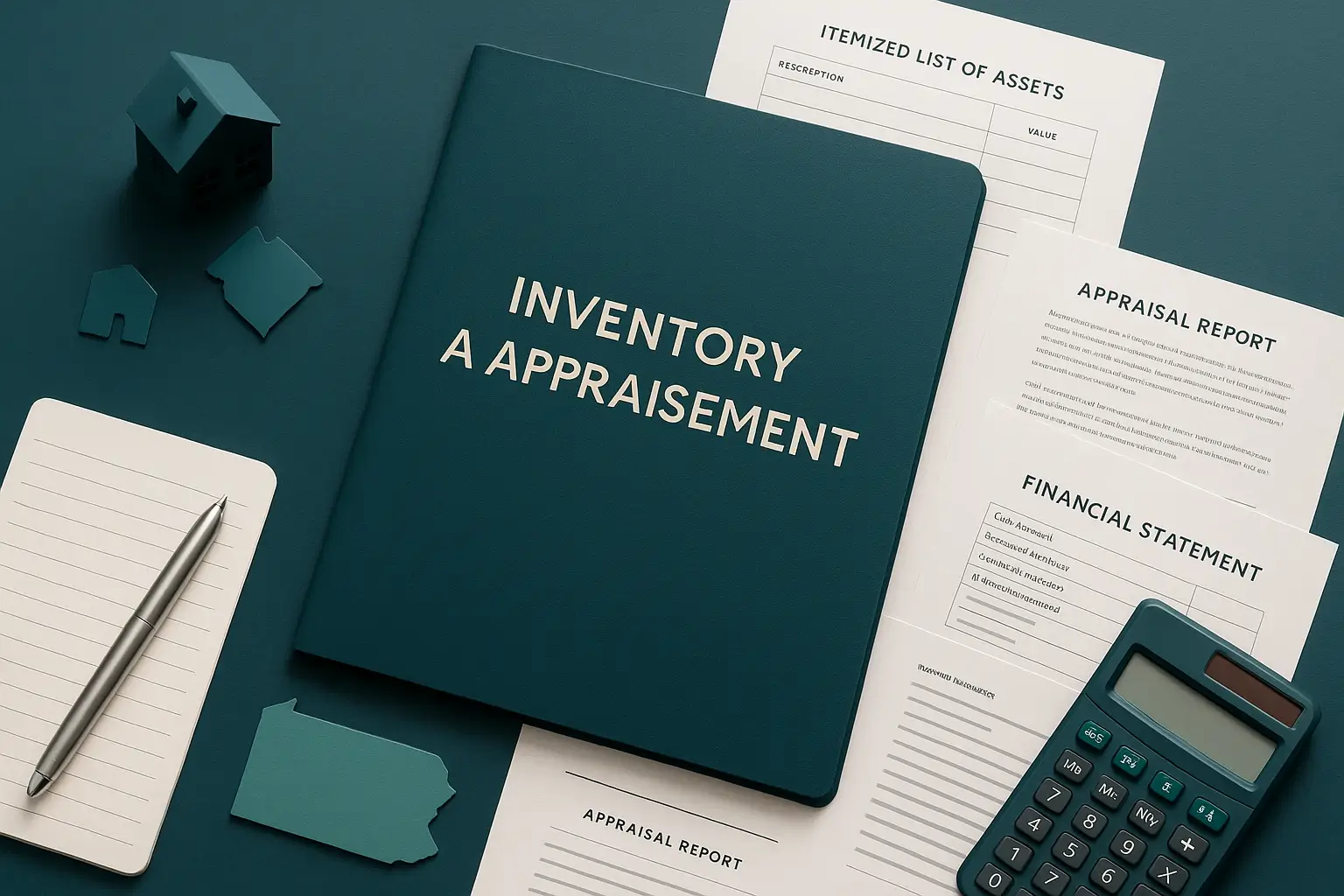
Inventory & Appraisement Process
Understand how to properly document and value estate assets according to Pennsylvania probate rules.
Learn more:
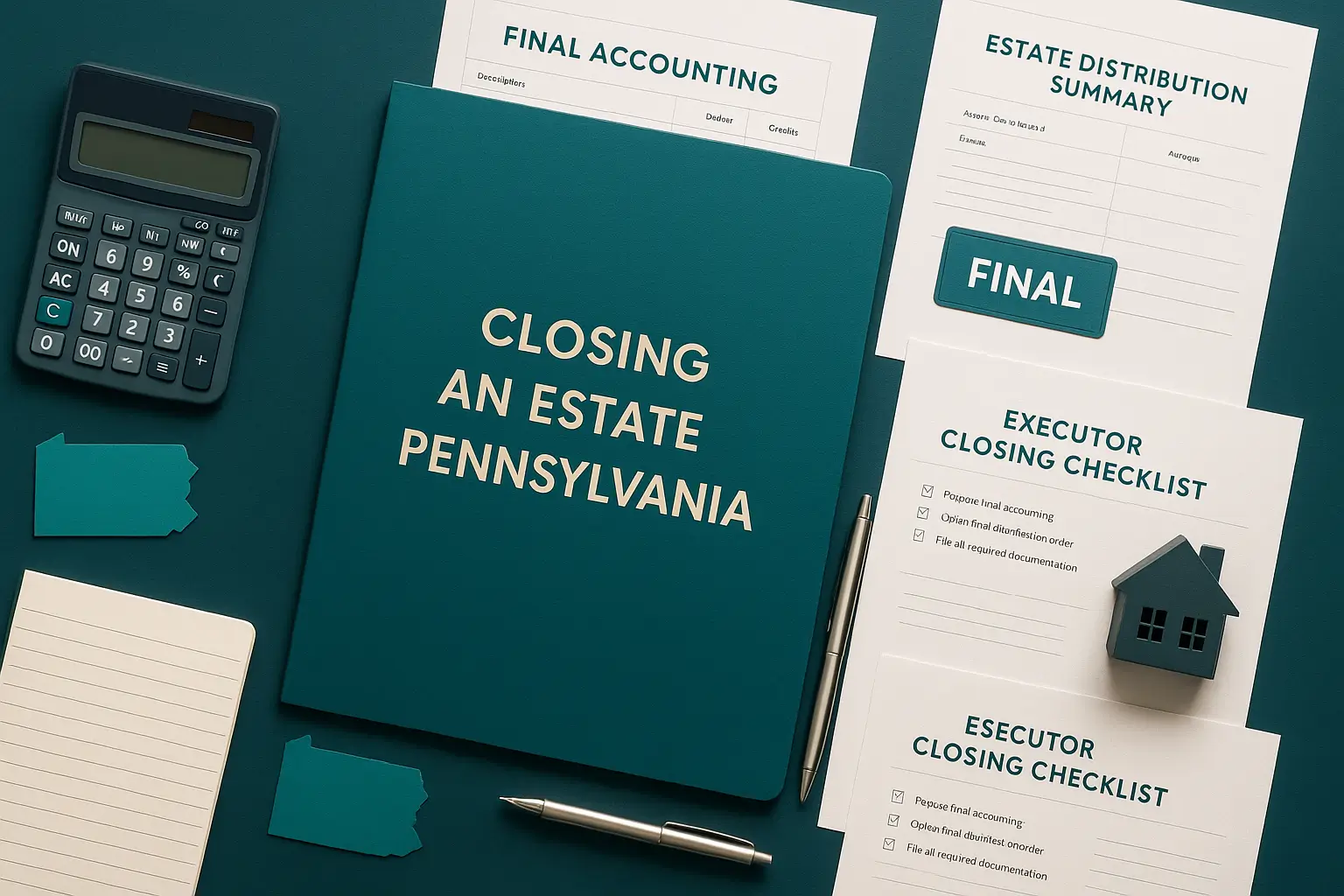
Closing an Estate in Pennsylvania
See what’s required to finalize the estate, submit the accounting, and complete probate.
Learn more:
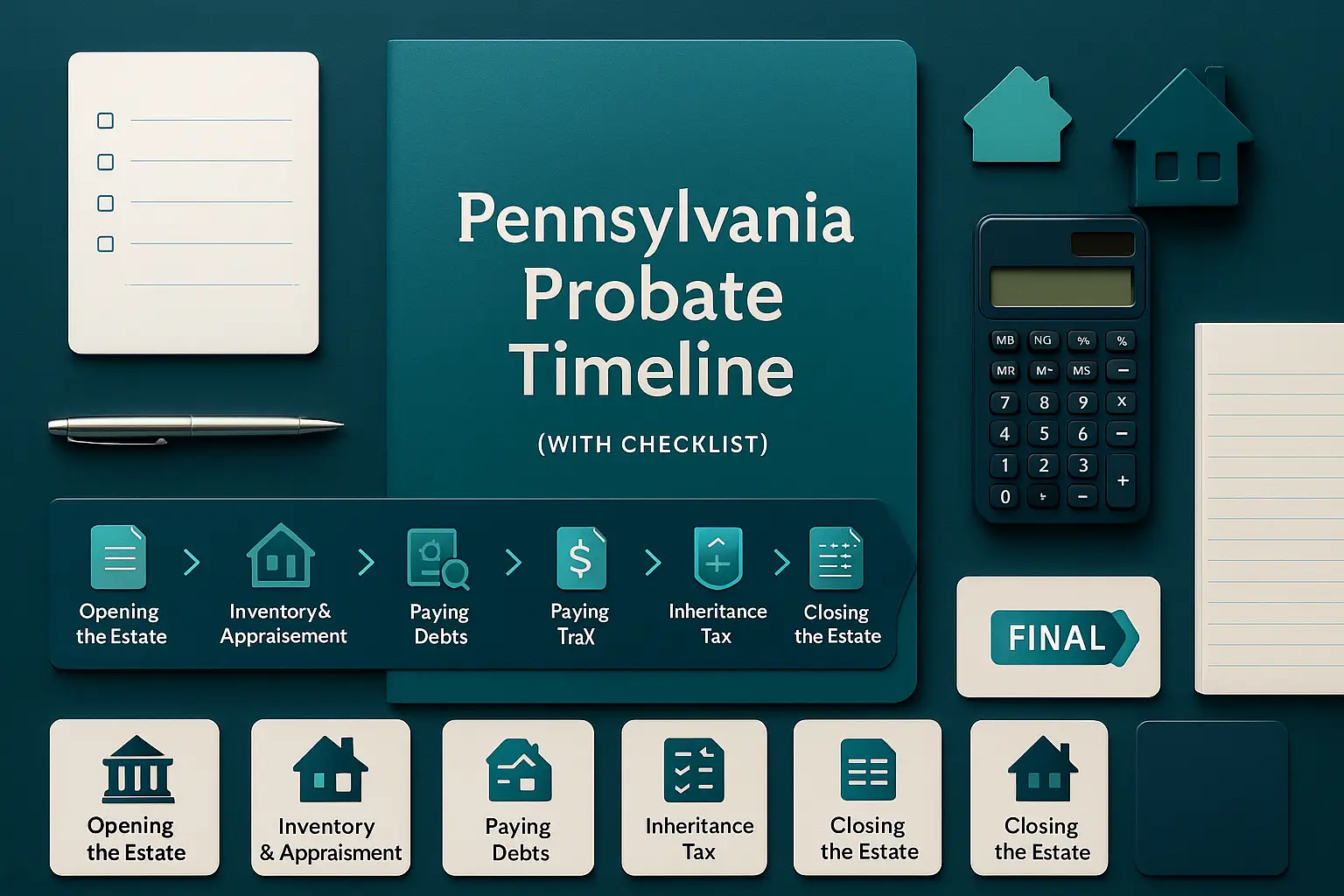
Pennsylvania Probate Timeline
(With Checklist)
A step-by-step overview of how long probate takes and what happens at each stage.
Learn more:
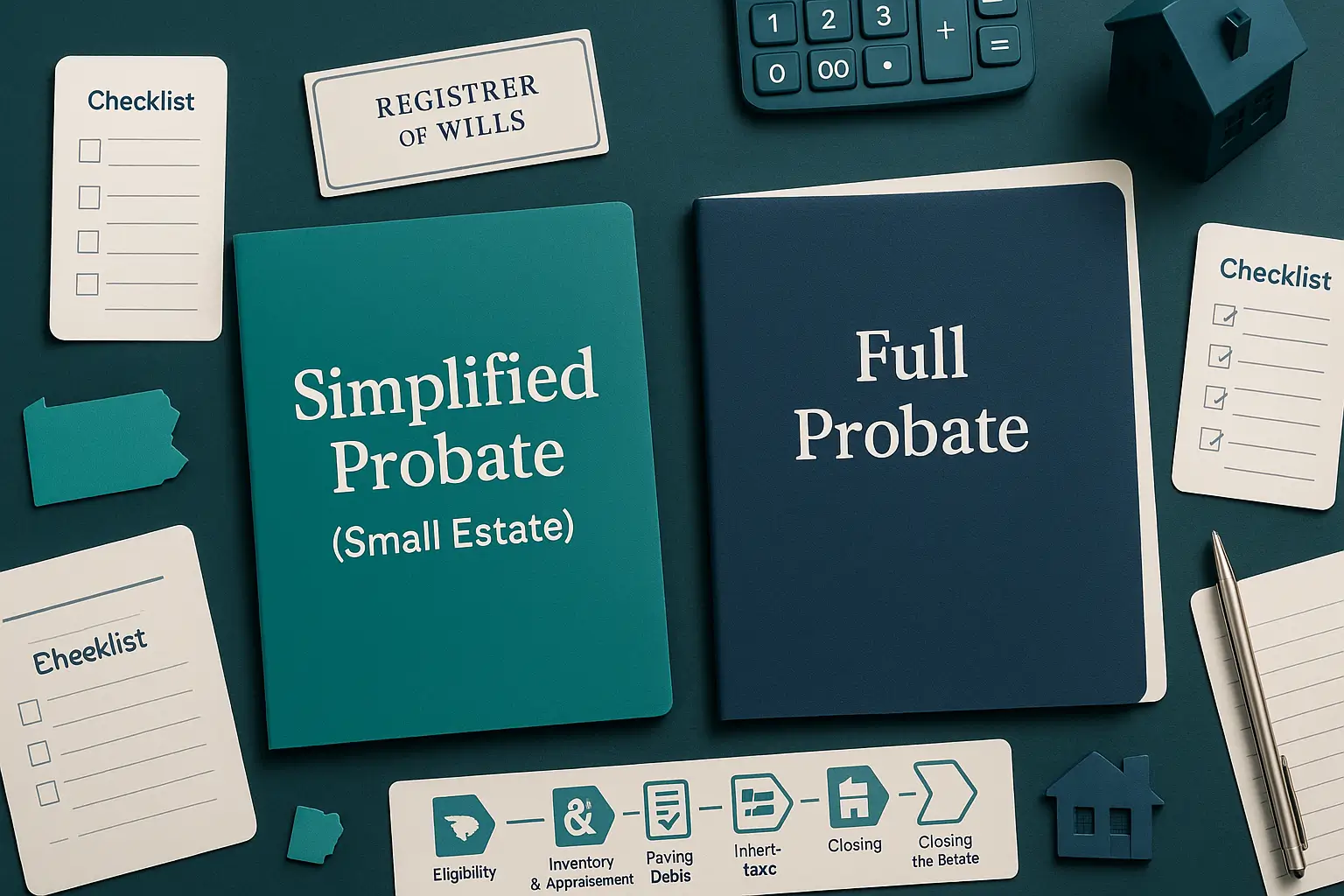
Simplified Probate vs Full Probate
Find out whether an estate qualifies as a Pennsylvania small estate and how the process differs.
Learn more:
Frequently Asked Questions About Probate in Pennsylvania
What is probate in Pennsylvania?
Probate in Pennsylvania is the legal process of settling a person’s estate after death. It includes validating the will, appointing an executor, paying debts and taxes, and distributing property to heirs.
Do all estates have to go through probate in Pennsylvania?
No, not all estates require probate in Pennsylvania. Assets with named beneficiaries or joint ownership often pass outside probate, but real estate and solely owned assets typically require the probate process.
How long does probate take in Pennsylvania?
Probate in Pennsylvania usually takes 9 to 15 months. The timeline depends on the size of the estate, court delays, tax filings, real estate issues, and whether there are family disputes.
How much does probate cost in Pennsylvania?
Probate costs vary but often include court fees, attorney fees, appraisals, and Pennsylvania inheritance tax. Most estates spend several thousand dollars depending on complexity and required filings.
What does an executor do in Pennsylvania?
An executor manages the estate by securing assets, paying debts and taxes, and distributing property to beneficiaries. They must follow Pennsylvania law and act in the best interest of the estate.
Can an executor sell a house during probate?
Yes, an executor in Pennsylvania can sell a probate house if the will allows it or if the court grants authority. The executor must ensure the sale follows state law and benefits the estate.
What happens if there is no will in Pennsylvania?
If there is no will, Pennsylvania’s intestacy laws decide who inherits the estate. The court appoints an administrator to handle the process in place of an executor.
Who pays Pennsylvania inheritance tax?
The estate pays Pennsylvania inheritance tax before distributing assets. The tax rate depends on the beneficiary’s relationship to the deceased.
How much is Pennsylvania inheritance tax?
Pennsylvania inheritance tax ranges from 0 percent to 15 percent. Spouses pay 0 percent, children pay 4.5 percent, siblings pay 12 percent, and others pay 15 percent.
What debts must be paid during probate?
Executors must pay estate debts such as medical bills, credit cards, utilities, mortgages, and taxes. In Pennsylvania, debts must be handled before heirs receive distributions.
What happens if the estate cannot pay its debts?
If the estate cannot pay its debts, it is considered insolvent, and Pennsylvania law requires a specific order of payment. Beneficiaries may receive nothing if debts exceed assets.
What is a short certificate in Pennsylvania probate?
A short certificate is a document from the Register of Wills giving the executor legal authority to manage the estate. It is required to access accounts, sell property, and handle estate business.
When can beneficiaries receive their inheritance?
Beneficiaries typically receive their inheritance after debts, taxes, and court requirements are completed. In most Pennsylvania estates, distributions happen near the end of the 9–15 month probate timeline.
Can beneficiaries stop the executor from selling property?
Beneficiaries cannot stop a legally authorized executor from selling estate property. However, they may challenge the sale in court if they believe the executor is acting improperly.
What happens if an executor does not do their job?
If an executor fails to perform their duties, beneficiaries can ask the court to intervene or remove the executor. Pennsylvania courts can appoint a replacement if necessary.
Do I need a probate attorney in Pennsylvania?
You are not required to have an attorney, but most executors hire one to avoid mistakes and meet legal deadlines. Pennsylvania probate rules can be complex, especially when real estate is involved.
What should I do first when someone passes away in Pennsylvania?
The first steps include securing the property, locating the will, obtaining the death certificate, and contacting the Register of Wills. These actions allow the probate process to begin properly.
Get Clear, Confident Guidance Through the Probate Process
Professional probate support helps executors avoid mistakes, save time, and stay compliant.
Executor guidance
Probate document support
Pennsylvania inheritance tax experience
Executor & Personal Representative Help
Real Estate, Property & Assets
Selling a Probate Property in Pennsylvania
Probate Real Estate Preparation
Property Issues in Probate
Probate Appraisals & Valuations
Taxes, Costs & Financial Issues
Contested Wills in Pennsylvania
Probate Disputes & Litigation
Questions About Wills
Intestate Estates in PA
Wills, Disputes & Legal Issues
Contested Wills in Pennsylvania
Probate Disputes & Litigation
Questions About Wills
Intestate Estates in PA